由MaXChenEE上传
本特殊页面展示所有上传的文件。
| 日期 | 名称 | 缩略图 | 尺寸 | 说明 | 版本 |
|---|---|---|---|---|---|
| 2026年3月22日 (日) 21:24 | An information integration theory of consciousness FUGURE1.png (文件) |  |
119 KB | 1 | |
| 2026年3月22日 (日) 22:01 | An information integration theory of consciousness.png (文件) |  |
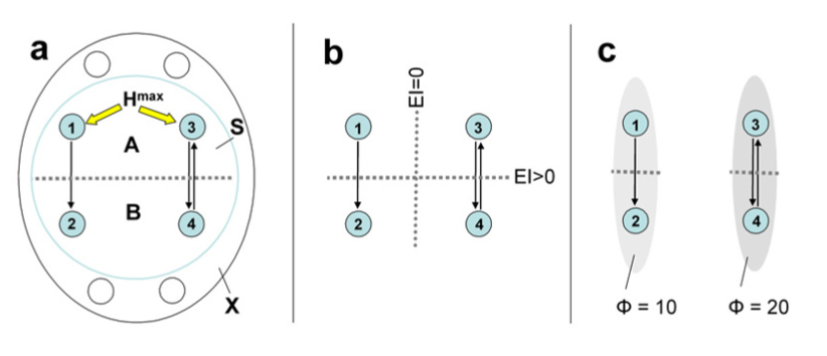
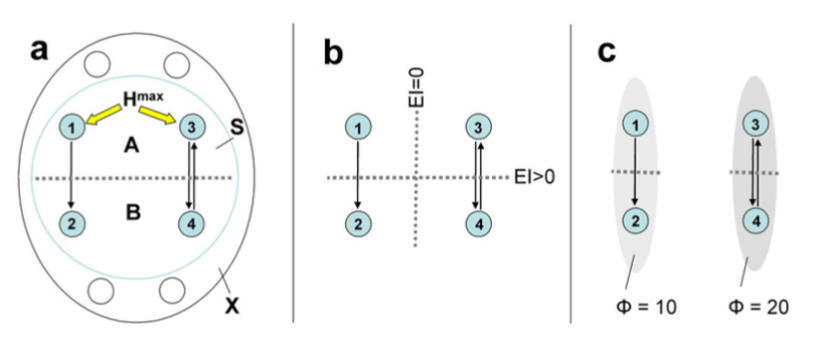
119 KB | Effective information, minimum information bipartition, and complexes. a. Effective information. Shown is a single subset S of 4 elements ({1,2,3,4}, blue circle), forming part of a larger system X (black ellipse). This subset is bisected into A and B by a bipartition ({1,3}/{2,4}, indicated by the dotted grey line). Arrows indicate causally effective connections linking A to B and B to A across the bipartition (other connections may link both A and B to the rest of the system X). To measure EI… | 1 |
| 2026年3月23日 (一) 22:06 | Effective information matrix and activity states for two complexes having the same value of Φ.png.png (文件) |  |
325 KB | 1 | |
| 2026年3月23日 (一) 22:41 | Effective information matrix and activity states for two complexes having the same value of Φ.png (文件) |  |
325 KB | a. Causal interac�tions diagram and analysis of complexes. Shown are two systems, one with a "divergent" architecture (left) and one with a "chain" architecture (right). The analysis of complexes shows that both contain a complex of four elements having a Φ value of 10. b. Effective information matrix. Shown is the effective information matrix for the two complexes above. For each complex, all bipar�titions are indicated by listing one part (subset A) on the upper row and the complementary pa… | 1 |